ServicesCollision Repair
Collision Repair in Yosemite Lakes
Impact damage rarely ends at the dent you can see. We open up your car until we have found each bent bracket, cracked mount and damaged sensor. Before the repair begins, you get a plain account of what broke, why it broke and how we plan to fix it.
What collision repair actually covers
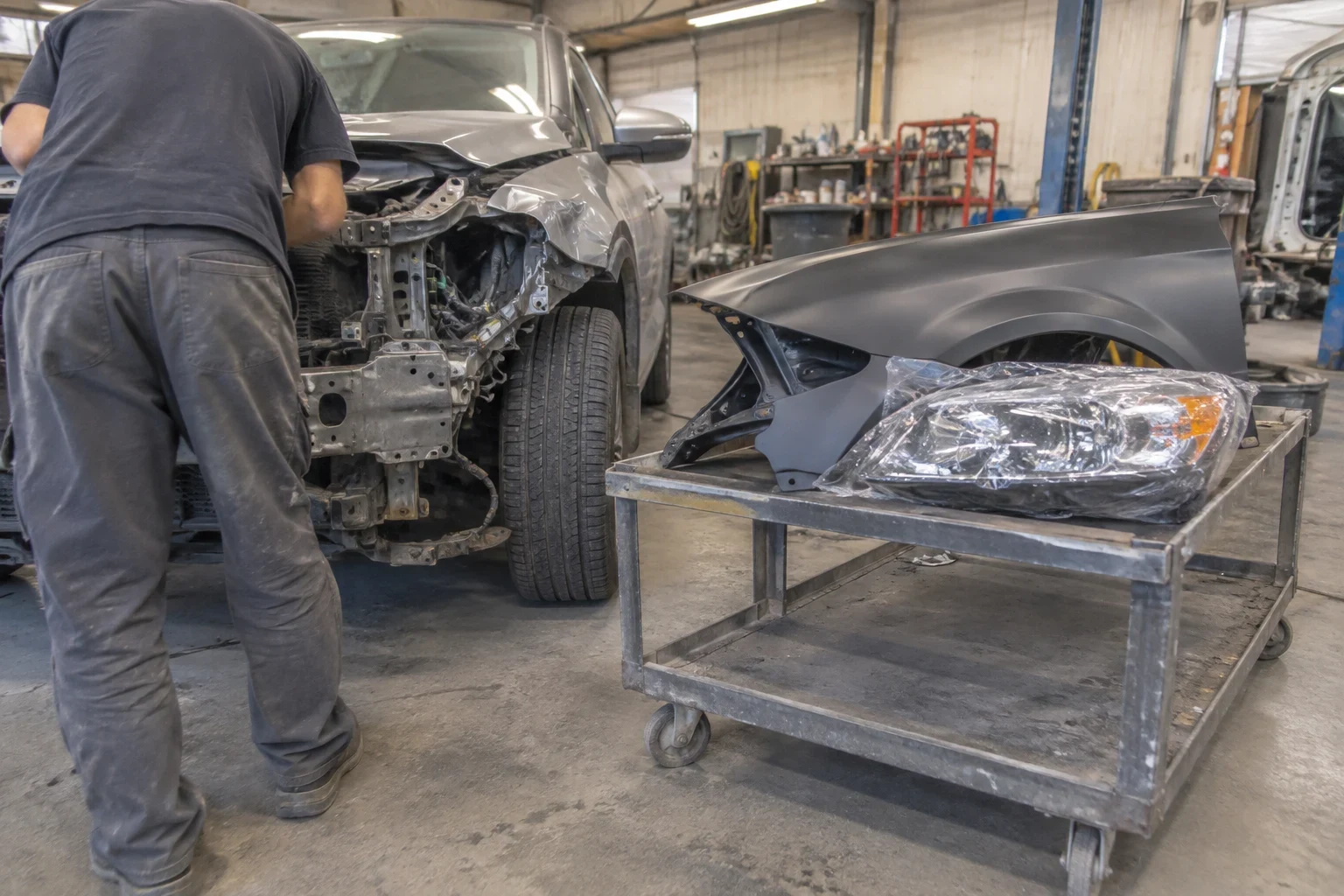
Collision repair is the work of bringing a vehicle back to its pre-accident shape, strength and function after an impact. That can mean replacing a crushed bumper reinforcement, pulling a unibody rail back to factory dimensions, swapping a cracked headlamp housing, or refinishing panels so the color matches under any light. Most jobs mix several of these.
The reason it gets complicated is energy. A modern car is built to crumple in a controlled way, so a hit at the front corner can push force through the radiator support, the apron and the strut tower. Those parts sit behind the plastic bumper cover, where you cannot see them from the driveway. Our job is to find that damage, explain it to you, and fix it to the manufacturer's repair procedures.
If the damage turns out to be cosmetic only, we will say so and point you toward dent repair or bumper repair, which cost less and take less time.
What the work includes
Teardown inspection
We remove the bumper cover, lamps and inner liners around the impact zone. Hidden damage like bent crash bars, broken clips and cracked brackets shows up here, not in a walk-around.
Structural measurement
We measure the body against factory reference points. If a rail, apron or pillar is out of spec, the repair moves into frame straightening so the suspension and doors line up again.
Panel repair or replacement
Steel panels with soft, shallow damage can often be repaired. Aluminum, high-strength steel and kinked or torn panels are usually replaced, because the metal loses strength when it is worked too far.
Mechanical and electrical parts
Radiators, condensers, cooling fans, wiring harnesses and headlamp assemblies often take damage in front-end hits. We replace what is broken and check that it all works before reassembly.
Sensor and camera calibration
Parking sensors, radar units and cameras mounted in bumpers and windshields must be aimed correctly after a repair. A sensor that sits a few degrees off can make lane-keeping or automatic braking react at the wrong moment.
Paint and corrosion protection
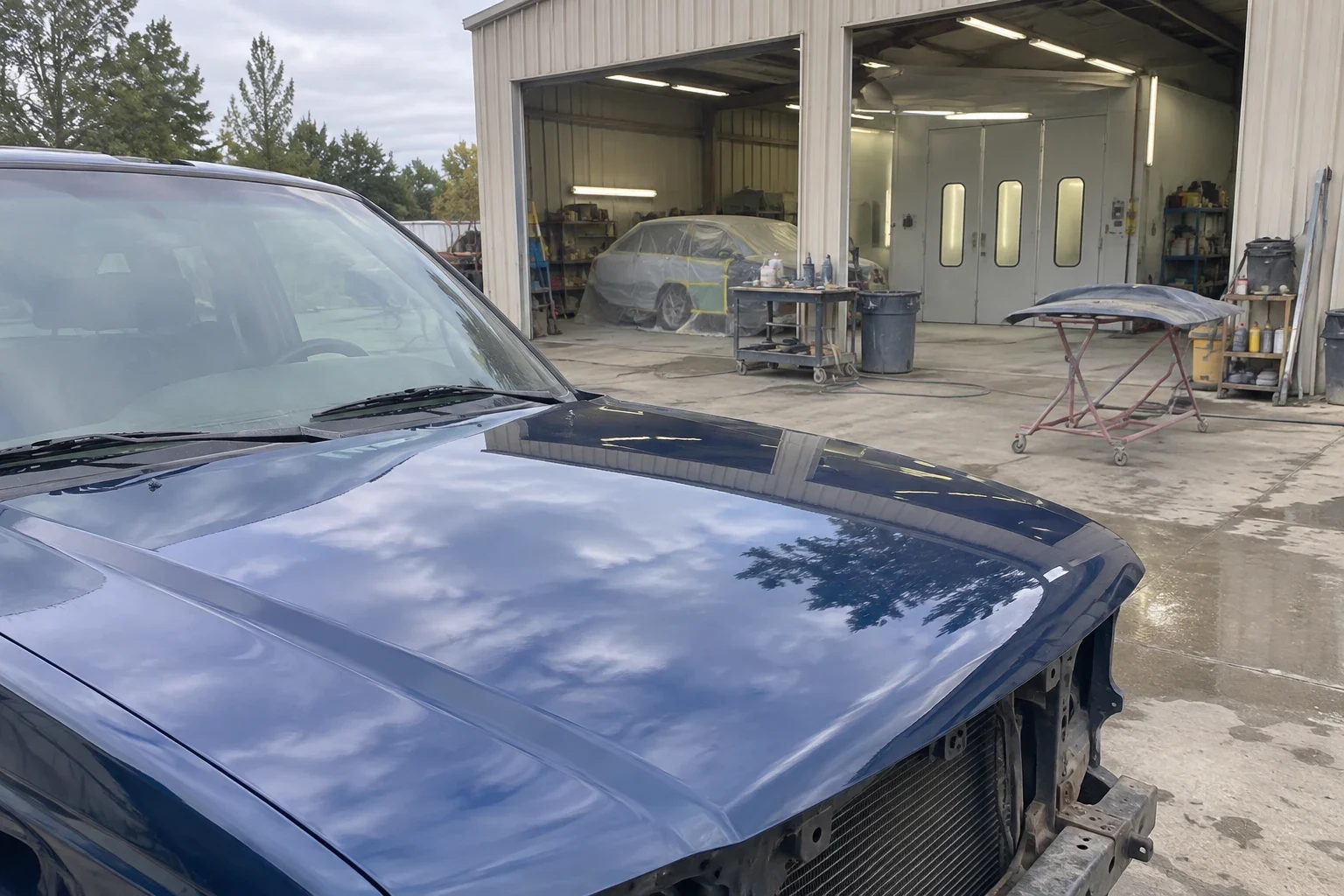
Repaired areas get primer, color matched to your car's paint code, clear coat and seam sealer where the factory used it. Our paint and refinishing work carries a lifetime warranty on all paint work.
Signs your car needs more than a quick fix
- Gaps that changed
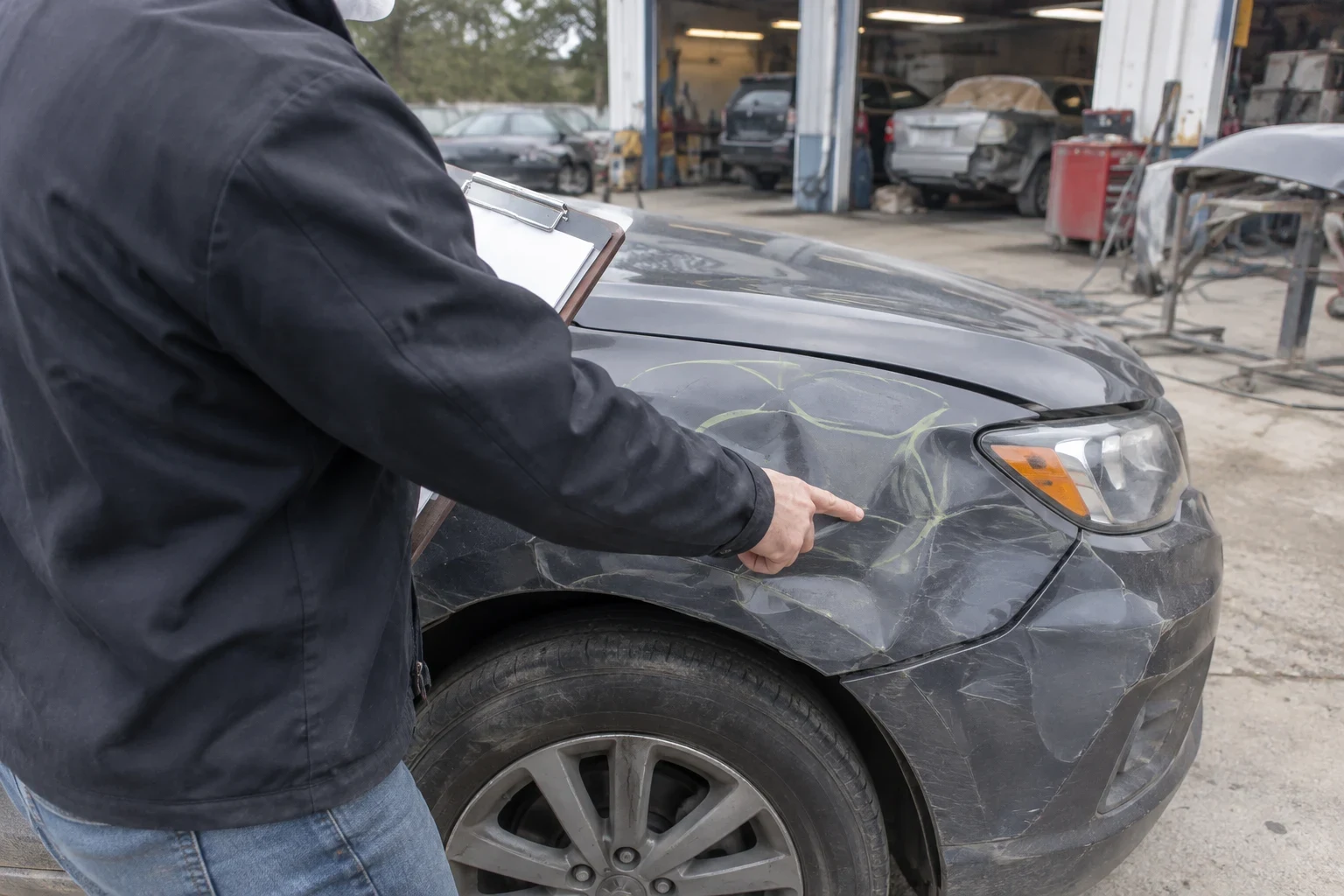
- If the hood, a door or the trunk lid sits unevenly or the gap is wider on one side, something behind the panel has shifted. That is usually a mount or structural member, not the panel itself.
- The car pulls or the wheel is off-center
- A wheel hit or corner impact can bend a control arm, tie rod or the subframe. Alignment alone will not fix a bent part.
- Warning lights after the impact
- A lit airbag, ABS or driver-assist light means a sensor or its wiring was damaged or unplugged in the crash. A deer strike on a foothill road often takes out a front radar this way.
- Fluid under the front end
- Green, pink or orange drips usually point to a cracked radiator or condenser. Driving with a coolant leak can overheat the engine, which turns a body repair into an engine repair.
- Doors that stick or won't latch
- A door that drags or needs a slam to close often means the pillar or hinge area moved. That deserves a measurement, not just a hinge adjustment.
How the repair goes once you bring it in
- 1
Look and listen
You walk us through what happened, and we inspect the car together. We point out what we can already see and explain what might be hidden.
- 2
Teardown and written estimate
We disassemble the impact area and write the estimate line by line: each part, each labor operation, and whether a part is being repaired or replaced and why. If you have an insurance claim open, this becomes the document we share with the adjuster.
- 3
Structure and mechanical first
Measuring and straightening come before anything cosmetic, because panels hung on a crooked structure will never fit right. Cooling, suspension and electrical parts go in next.
- 4
Body, paint and reassembly
Panels are fitted, gaps are set, and the paint is sprayed and blended into neighboring panels so there is no visible edge. Lamps, trim and moldings go back on.
- 5
Calibration, road test and handover
We calibrate sensors, scan for fault codes and drive the car. When you pick it up, we show you what was done and hand you the paperwork.
What moves the cost of collision repair
Two cars with similar dents can have very different bills, because the price is set mostly by what sits behind the outer skin. We write the estimate after teardown so the number reflects the real damage. If we find more once the repair is underway, we stop, show you, and explain the added line before going further.
- Hidden structural damage
- Bent rails, aprons or a radiator support add measuring, pulling and sometimes sectioning. This is the biggest swing in most estimates.
- Parts type
- New factory parts, aftermarket parts and quality used parts differ in cost and in fit. We tell you which ones the estimate uses and what that means for your car.
- Driver-assist equipment
- Bumpers and windshields with radar, cameras or parking sensors need extra parts and a calibration step after reassembly.
- Paint and blending
- Tri-coat pearls and metallic colors take more material and more panels blended to match than a solid color.
- What the panels are made of
- Aluminum and high-strength steel call for dedicated equipment and set repair methods from the automaker. Heat and reshaping weaken these metals, so damaged panels are swapped out more often than they are worked back into shape.
Collision repair questions
- Will my car be as safe as it was before the accident?
- That is the goal of following the manufacturer's repair procedures. Structural parts are measured back to factory dimensions, and welds, sealers and corrosion protection go where the factory put them. We also calibrate any safety sensors so the systems behave as designed.
- Can I keep driving my car until the repair?
- It depends on the damage. A scuffed bumper cover is usually fine to drive on. Leaking coolant, a lamp that no longer works, a tire rubbing on a bent fender, or an airbag warning light are reasons to stop and have it checked first.
- Why did the estimate change after you took it apart?
- The first look only covers what is visible. Once the bumper cover and liners come off, we often find broken brackets, cracked absorbers or a bent reinforcement. We document those with photos and explain each added item before any of it is repaired.
- Do I have to go through insurance?
- No, you can pay for the repair yourself. If you do file an insurance claim, our Insurance Claims page explains how the estimate, the adjuster and any supplements fit together.
- How long will the repair take?
- Light damage with parts in stock moves quickly. Structural work, back-ordered parts and insurance approval for hidden damage are what stretch the timeline. We give you a realistic estimate of time after teardown and update you if parts are delayed.
- Is the paint covered after the repair?
- Yes. We offer a lifetime warranty on all paint work, so the refinish on your repaired panels is covered.
Get a straight read on the damage
Tell us what happened and what you are seeing, and we will explain what is likely involved and what to expect when you bring your car in. Get your quote by phone and drive in when it suits you.