ServicesPaint and Refinishing
Paint and Refinishing in Yosemite Lakes
We refinish damaged, faded and peeling paint on your car using a base coat matched to your vehicle's paint code and a fresh urethane clear coat. Before any work starts, we explain what is failing and why, and which panels actually need paint.
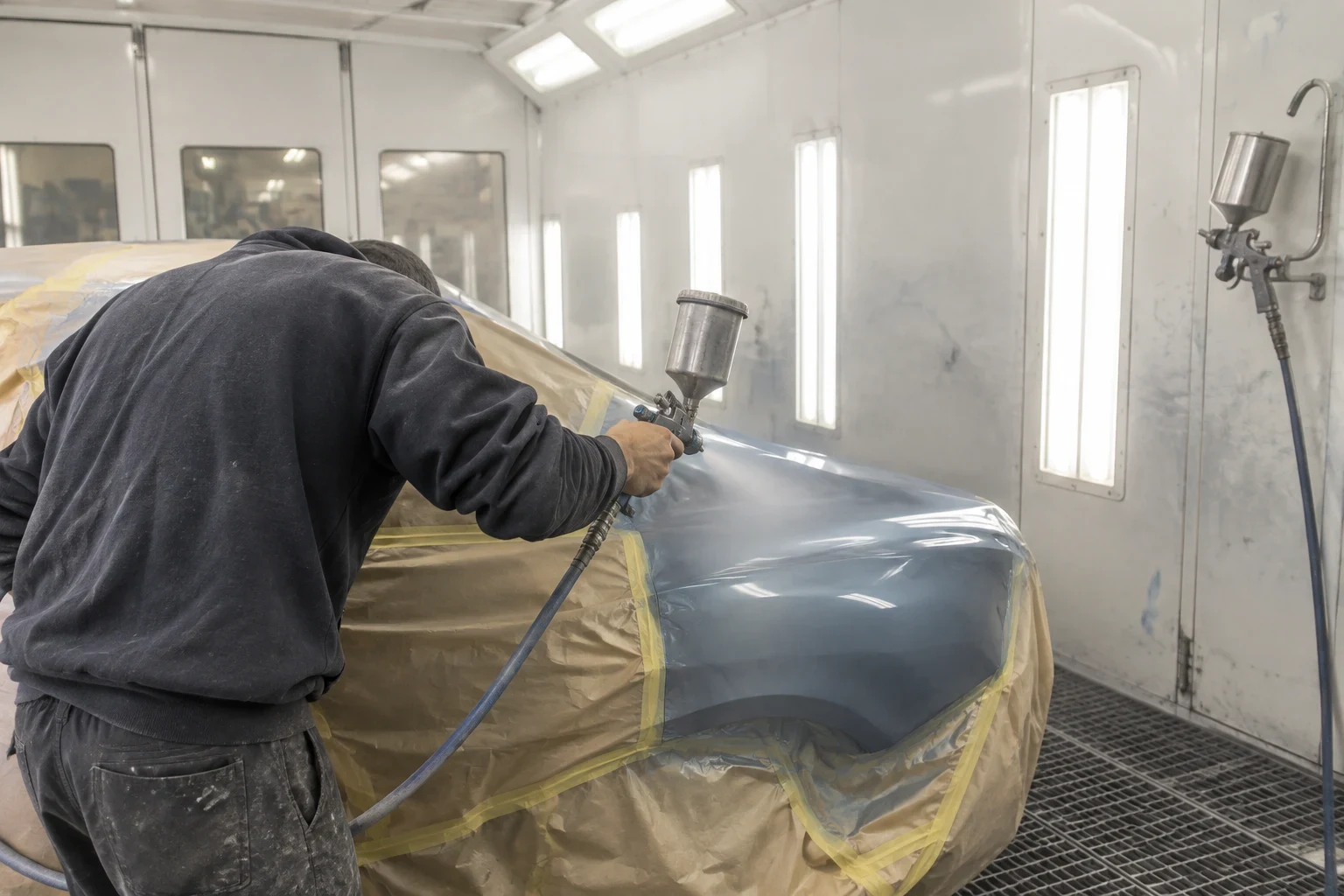
What paint and refinishing actually fixes
Most cars built in the last few decades carry a two-stage finish. A thin layer of colored base coat sits under a thicker layer of clear coat, and the clear does the hard work: it blocks UV, resists chemicals and gives the gloss. When people say their paint is going bad, the clear coat has usually broken down first. The color underneath is fine until the clear is gone.
Refinishing means taking the damaged area down to a sound layer, repairing what is under it, then rebuilding the finish with primer, base coat and clear. Sometimes that is one bumper cover. Sometimes it is a hood and roof that have chalked from years of sun. We will tell you which one you are looking at, and whether a polish could get you there without paint at all.
Every refinish we do carries a lifetime warranty on all paint work.
What the work includes
Paint code and spray-out cards
We pull the paint code from the door jamb tag and spray test cards before touching your car. Factory colors vary from batch to batch, so the card is held against your panel in daylight to confirm the match.
Surface prep down to sound material
Failed clear is sanded off, edges are feathered so no ridge shows through, and any bare metal gets epoxy or etch primer. Skipping this step is why cheap paint jobs peel within a year or two.
Blending into adjacent panels
Metallic and pearl colors change shade depending on how the flakes lay down. We fade the new base coat into the neighboring panel so your eye does not catch a line at the seam.
Urethane clear coat and cure
A two-component urethane clear goes on in multiple coats and is cured before the car is handled. Proper cure is what makes the clear hard enough to resist bird droppings, sap and car washes.
Color sand and polish
Once cured, we wet sand out dust nibs and texture, then machine polish to bring the gloss and smoothness in line with the original finish.
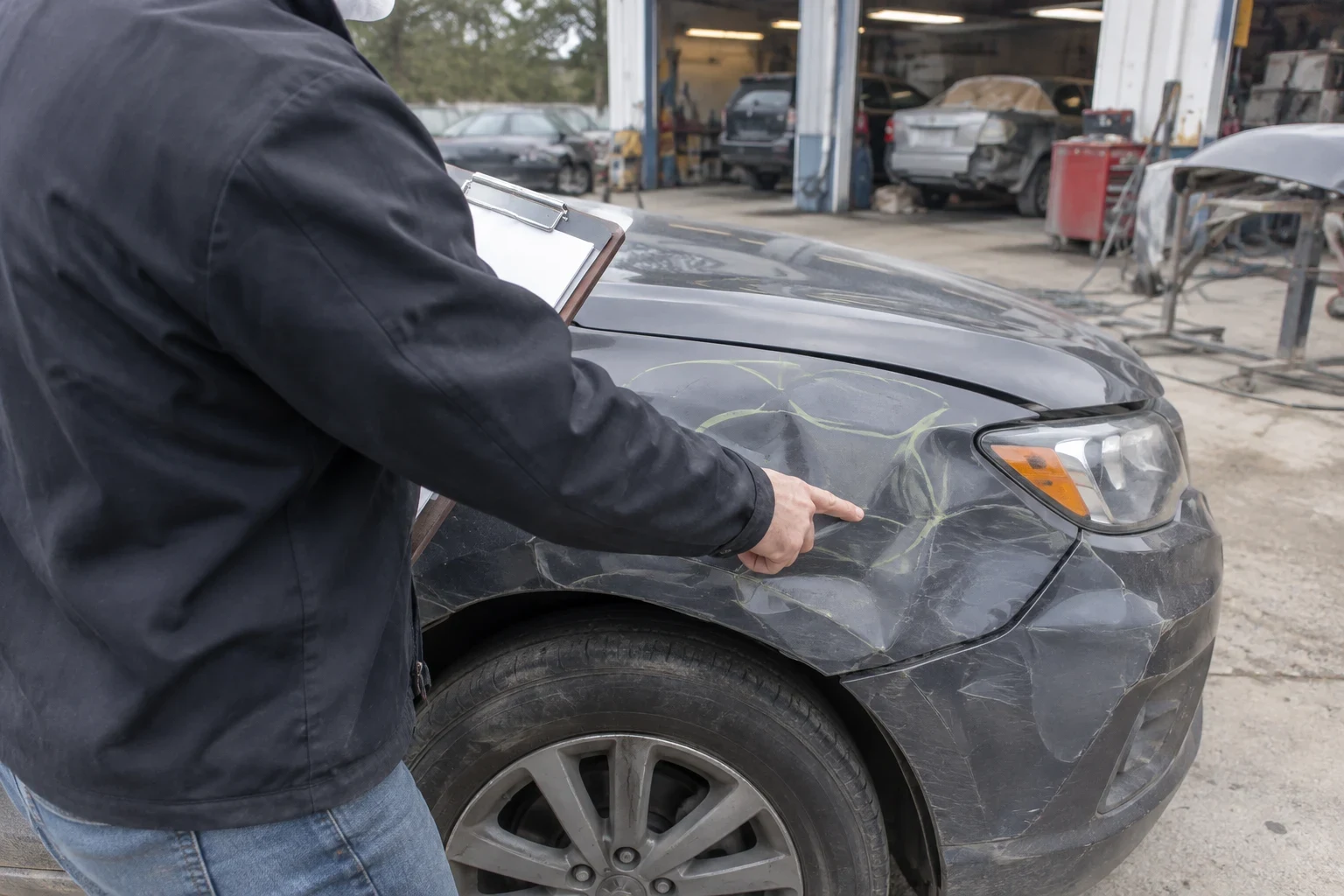
Signs your car needs refinishing
- Clear coat peeling or flaking
- White, cloudy patches that lift at the edges mean the clear has delaminated from the base coat. It will keep spreading, and polishing cannot fix it.
- Chalky, faded roof or hood
- Horizontal panels take the most sun. Long, hot summers here bake those surfaces hardest, and once the clear oxidizes the color looks dull and powdery.
- Scratches you can feel with a fingernail
- If your nail catches, the scratch has gone through the clear and likely into the base or primer. That needs filling and refinishing, not just compound.
- Rock chips on the front end
- Chips on the hood leading edge and bumper expose primer or bare steel. Left open, steel chips start to rust and spread under the surrounding paint.
- Bubbling near edges or wheel arches
- Blisters usually mean rust is forming under the paint. The metal has to be treated before any new paint will stay put.
How a paint job runs at our shop
- 1
Inspect the finish in good light
Drop your vehicle off and we check every affected panel in strong light, with a paint thickness gauge where it helps. We show you which areas are failing, which are only cosmetic, and how each choice changes the cost and the look.
- 2
Written estimate by panel
Each panel is listed with whether it gets a full refinish or a blend, plus any rust or body work that has to happen first. If an accident caused the damage, our Insurance Claims page covers how the paperwork fits in.
- 3
Prep, mask and spray
Trim and handles come off where practical rather than being taped around, so no tape edges show. Primer, base coat and clear are then applied in a controlled booth.
- 4
Cure, finish and final check
Once the clear has cured, we color sand and polish, put the parts back on and compare the match outside in daylight. You look the car over before pickup and get care notes for the fresh clear's first weeks.
What moves the price of a refinish
Most of what you pay for in paint work is labor: sanding, priming, masking and polishing. The paint and clear are a smaller share than people expect. Every line on our estimate says what it covers, and we price only after we have seen the finish in person.
- Panel count and blend panels
- Every panel that gets color adds its own prep, material and time in the booth. Fading the base coat into the panel next door costs some extra labor, but it prevents a visible shade change at the seam.
- What is under the failed clear
- Clear that is lifting off a healthy base coat is a lighter job than paint chipped down to steel or bubbling over rust. Any rust has to be cut out or treated and primed before color is sprayed.
- Solid, metallic or tri-coat
- A plain solid color needs the fewest coats and is easiest to match. Metallic flake, pearl and three-stage whites need more coats and more test cards before the shade is right.
- Removing trim instead of taping
- Taking off moldings, badges, mirrors and handles adds labor time. The payoff is crisp paint edges with no tape line where the trim meets the panel.
Paint and refinishing questions
- How close will the color be to my original paint?
- The paint code from the door jamb gets us the formula, but sun exposure and factory batch differences shift every car a little. So we spray test cards and hold them against your actual panel before mixing the final batch. Metallic and pearl colors are blended into the neighboring panel, so the repaired area does not stand out at normal viewing distance.
- Can my faded paint be polished instead of repainted?
- It often can, as long as the clear coat is intact and the dullness is surface oxidation. A paint thickness gauge shows how much clear remains to cut into. Once the clear is flaking or sanded through, no polish will restore it, and refinishing is the straight answer.
- What warranty comes with the paint work?
- Paint work from our shop carries a lifetime warranty, and that covers all paint work we do. Ask us by phone how the coverage applies to the panels on your job.
- How should I care for fresh paint?
- Wash by hand with a mild soap for the first few weeks, and hold off on wax or sealant until the clear has fully hardened. Wipe off bird droppings and tree sap right away, because they can etch clear that is still curing.
- Do you repaint whole cars or just damaged areas?
- We do both. Most jobs come down to a few panels, which keeps the cost lower and leaves healthy factory paint alone. When damage is spread around the car, we put the panel-by-panel price beside a full refinish so you can weigh them. Dents get fixed before paint, and our Dent Repair and Collision Repair pages explain that part.
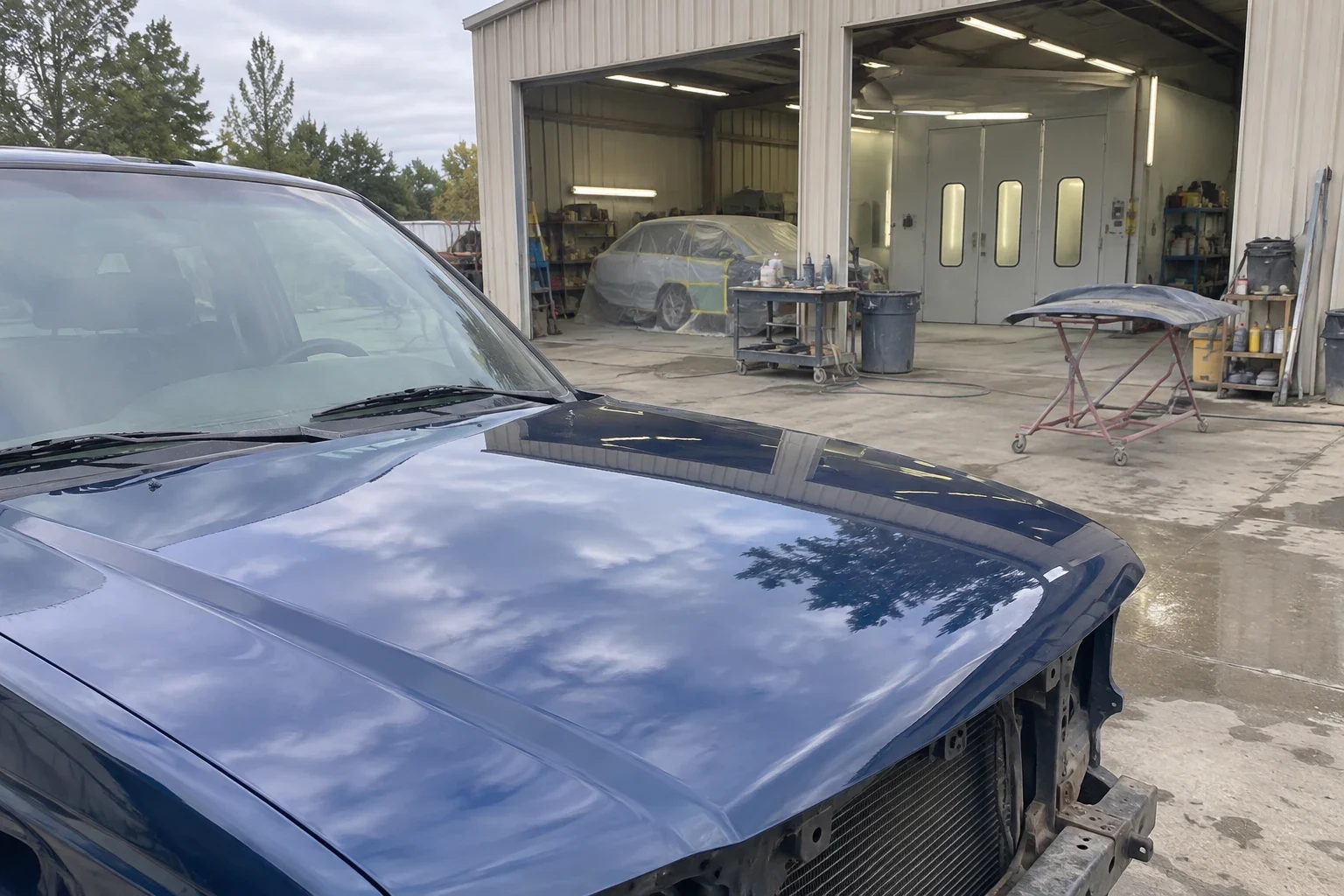
Find out what your paint really needs
Describe the peeling, fading or chips on your vehicle and we will give you the likely cause and the options that fit it. After that, bring it to our Yosemite Lakes shop so we can measure the finish and write up the estimate.